10 Foods That Help Control Blood Sugar
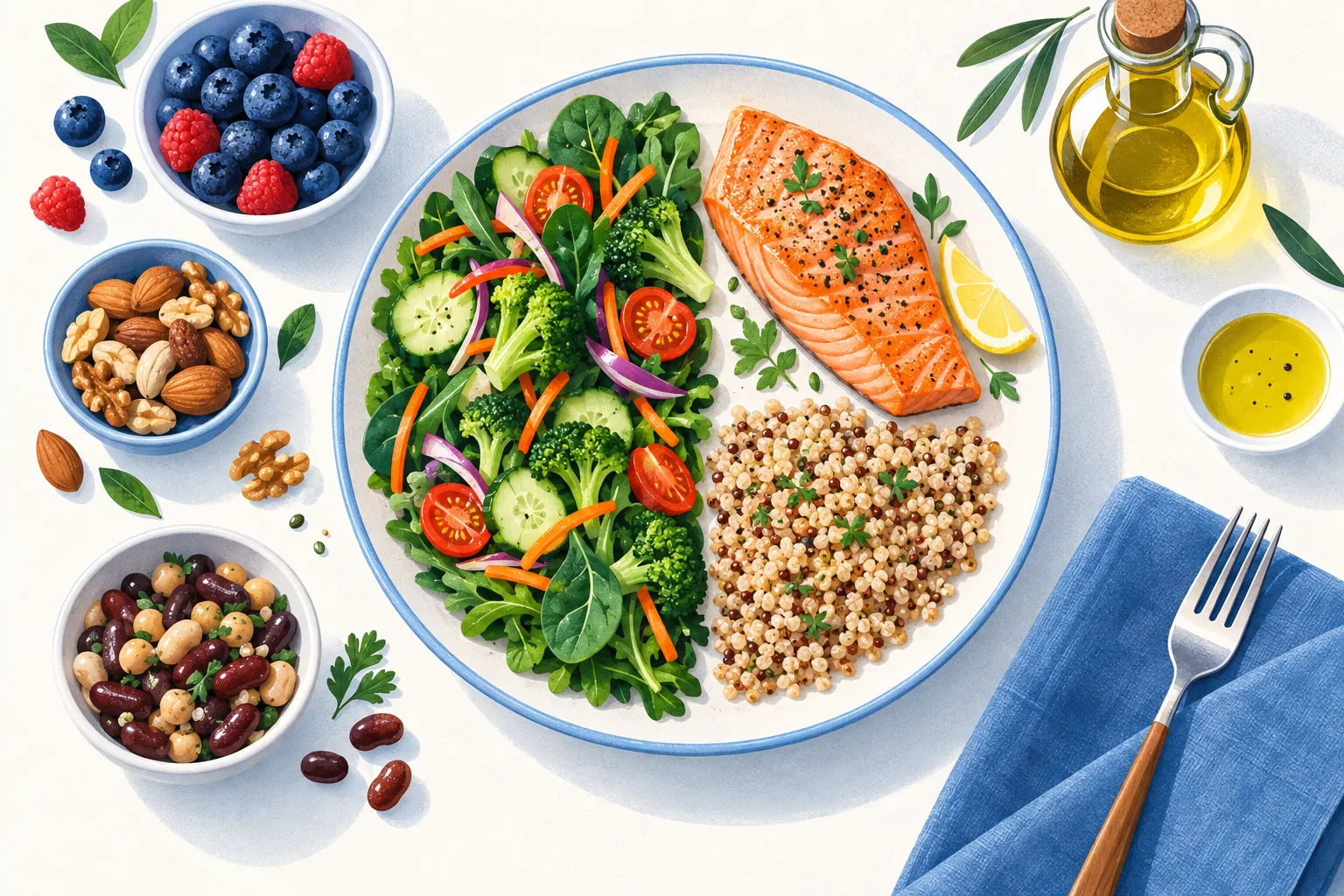
No single food controls blood sugar — your overall eating pattern does. But some foods make steady glucose much easier because they are rich in fiber, protein or healthy fats and low in fast-digesting starch and sugar.
1. Non-starchy vegetables
Leafy greens, broccoli, cauliflower, peppers, zucchini, green beans, tomatoes: very few carbohydrates, lots of fiber and nutrients. Make them half your plate.
2. Legumes
Beans, lentils and chickpeas combine slow carbohydrates, fiber and protein. Studies link regular legume intake to better HbA1c.
3. Fatty fish
Salmon, sardines, mackerel and trout provide protein and omega-3 fats that support heart health — important because diabetes raises cardiovascular risk. Aim for two servings a week.
4. Nuts and seeds
Almonds, walnuts, pistachios, chia and flaxseed: healthy fats, fiber and protein with little impact on glucose. A small handful a day.
5. Whole grains
Oats (steel-cut or rolled), barley, quinoa, bulgur, brown rice and whole-grain bread raise glucose more slowly than refined grains. Portion size still matters.
6. Berries and whole fruit
Fruit is fine with diabetes. Berries, apples, pears and citrus have fiber and a moderate glycemic effect. Prefer whole fruit to juice.
7. Eggs
A protein-rich breakfast with eggs helps keep morning glucose and appetite steady.
8. Plain Greek yogurt
High in protein, low in sugar if unsweetened. Add berries and nuts instead of sweetened varieties.
9. Olive oil and avocado
Monounsaturated fats slow digestion and fit the Mediterranean pattern, which has good evidence for blood sugar and heart health.
10. Water, unsweetened tea and coffee
Swapping sugary drinks for water is one of the most effective single changes. A can of regular soda contains about 39 g of sugar.
Build the plate
- ½ plate: non-starchy vegetables
- ¼ plate: protein — fish, poultry, eggs, tofu, legumes
- ¼ plate: whole grains or starchy vegetables
- Plus water and a small amount of healthy fat
Eating vegetables and protein before the starch in a meal can further reduce the glucose rise. If you use insulin, learn to count carbohydrates with your care team.
Foods to limit
Sugar-sweetened drinks and juice, white bread and refined snacks, sweets and pastries, processed meat, and large portions of potatoes, white rice and pasta.
Check how a meal affected you: compare a reading before and 2 hours after — and look it up in our checker.
Sources: ADA: Food & nutrition · NIDDK: Healthy living with diabetes
Check a blood glucose reading
Related guides
- Diabetes First Aid: Lows and Highs
- 10 Common Diabetes Myths — and the Facts
- Affordable Diabetes Medication: Ways to Save
- What Is Normal Blood Sugar? Ranges by Time of Day
- Blood Glucose Levels Chart (mg/dL and mmol/L)
Educational content only; not medical advice. Follow the treatment plan you have agreed with your doctor or diabetes team. In an emergency, call 911 (US) or your local emergency number.