Diabetes First Aid: Lows and Highs
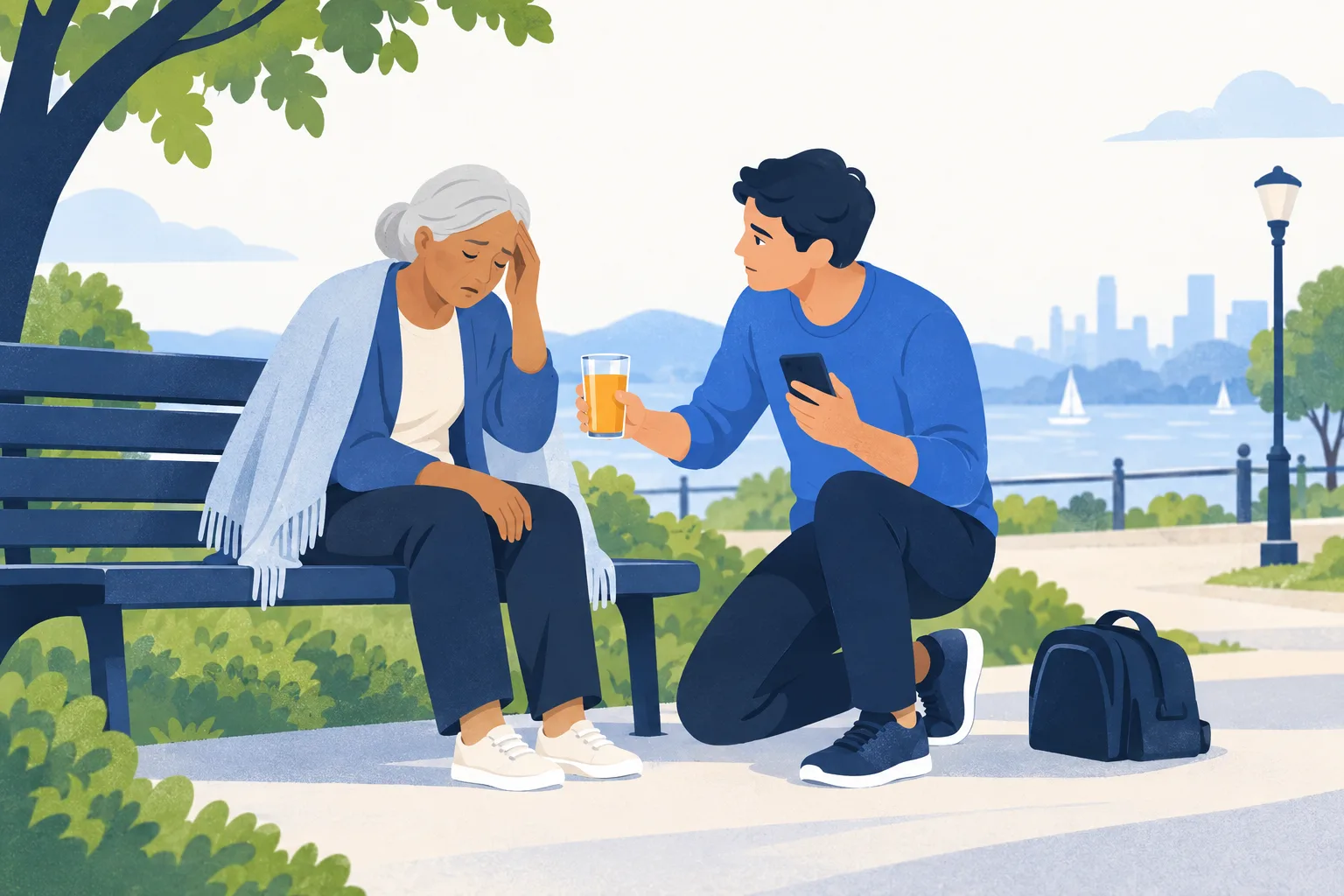
Diabetes emergencies come in two kinds: blood sugar that is too low — which can turn dangerous within minutes — and blood sugar that is too high, which usually develops over hours or days. If you are unsure which it is, treat as a low: a little sugar will not harm someone whose glucose is high.
Recognizing a low (hypoglycemia)
Sudden onset: sweating, shakiness, pale skin, fast heartbeat, hunger, irritability or odd behavior, confusion, slurred speech — sometimes mistaken for drunkenness. Can progress to unconsciousness or seizures.
First aid for a low
- Conscious and able to swallow: help them sit down. Give 15–20 g of fast-acting carbohydrate: glucose tablets or gel, ½ cup of juice or regular soda, or a tablespoon of sugar.
- Stay with them. After 15 minutes, check glucose if possible; repeat the sugar if they are not improving.
- Once better, give a snack or meal with carbohydrate.
- Unconscious, seizing or unable to swallow: nothing by mouth. Give glucagon if available — nasal spray into one nostril, or injection into the thigh or arm, following the package. Place them in the recovery position and call 911 (US) or your local emergency number.
During a seizure, protect the head and move hard objects away; don't restrain them or put anything in their mouth.
Recognizing very high blood sugar
Develops gradually: extreme thirst, frequent urination, dry skin, tiredness, blurred vision. With ketoacidosis (mainly type 1 diabetes and LADA): nausea, vomiting, abdominal pain, deep rapid breathing, fruity-smelling breath, drowsiness. With hyperosmolar state (mainly type 2): severe dehydration, confusion, very high glucose.
First aid for high blood sugar
- If they can check, measure glucose and ketones.
- Encourage sips of water if they are alert.
- Help them follow their own plan — correction insulin is for the person themselves or a trained caregiver.
- Call 911 (US) or your local emergency number for vomiting, breathing difficulty, confusion, drowsiness, or moderate to large ketones.
Be prepared
- People with diabetes: carry fast sugar and a glucagon kit if you use insulin; wear medical ID; teach family, friends and colleagues what to do.
- Glucagon now comes as a ready-to-use nasal spray and autoinjector — easier for helpers than the older mixing kits.
More: Low Blood Sugar (Hypoglycemia): Levels & Treatment · High Blood Sugar (Hyperglycemia): Levels & Signs
Sources: ADA: Hypoglycemia · NIDDK: Low blood glucose · MedlinePlus: Low blood sugar self-care · MedlinePlus: Diabetic ketoacidosis
Check a blood glucose reading
Related guides
- 10 Foods That Help Control Blood Sugar
- 10 Common Diabetes Myths — and the Facts
- Affordable Diabetes Medication: Ways to Save
- What Is Normal Blood Sugar? Ranges by Time of Day
- Blood Glucose Levels Chart (mg/dL and mmol/L)
Educational content only; not medical advice. Follow the treatment plan you have agreed with your doctor or diabetes team. In an emergency, call 911 (US) or your local emergency number.