Blood Glucose 60 mg/dL tested - is it bad?
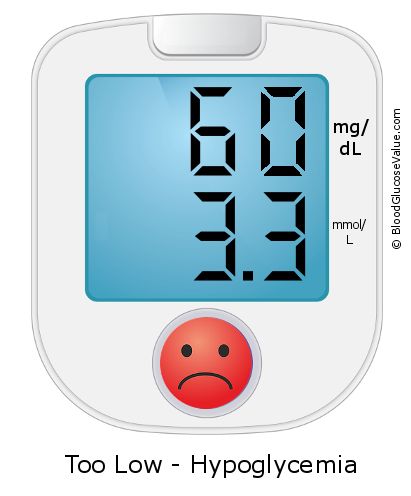
- Without diabetes, fastingBelow normal
- Without diabetes, 2 h after eatingBelow normal
- With diabetes, before a mealLevel 1 hypoglycemia
- With diabetes, after a mealLevel 1 hypoglycemia
- In mmol/L3.3 mmol/L
Treat the low now
- Take 15–20 g of fast-acting carbohydrate (4 glucose tablets, ½ cup (4 oz) of juice or regular soda, 1 tablespoon of sugar or honey).
- Re-check after 15 minutes and repeat if still below 70 mg/dL.
- Then eat a snack or your next meal. Do not drive until you are back above 70 and feel normal.
- Without diabetes and without symptoms: eating something and re-checking is usually enough. Mention repeated lows to your doctor.
If you don't have diabetes
60 mg/dL is below the normal range. Mild dips can follow intense exercise, a long gap between meals or a high-carb meal (reactive hypoglycemia). Eat something, re-check, and mention repeated lows to your doctor.
Fasting (8+ hours without food)
Below normal2 hours after eating (or glucose tolerance test)
Below normalIf you have diabetes
60 mg/dL is level 1 hypoglycemia (54–69 mg/dL). Treat it now with 15–20 g of fast-acting carbohydrate and re-check after 15 minutes (see the box above).
Before a meal / fasting
Level 1 hypoglycemia1–2 hours after a meal
Level 1 hypoglycemiaTargets for most non-pregnant adults (American Diabetes Association (ADA) Standards of Care). Your own targets may be different — for example in pregnancy, for children, older adults or people prone to lows. See pregnancy targets.
Make sure the number is right
- Wash and dry your hands before a finger-stick: fruit juice or sugar on the skin can raise the result a lot.
- Home meters may differ from a lab value by up to about 15%. At 60 mg/dL that means roughly 51–69 mg/dL.
- CGM sensors measure tissue fluid and lag 5–15 minutes behind blood when glucose changes quickly — confirm lows with a finger-stick.
Check another reading
Nearby values
Sources: ADA Standards of Care · ADA: Hypoglycemia · MedlinePlus: Blood glucose test
This page explains one reading in general terms. It is not a diagnosis or a treatment instruction. Follow the plan agreed with your doctor or diabetes team.